
Nostalgia Color by number game
Art Coloring GroupBoard
4.4834.00 Reviews
- Version
- 1.3.1
- Installs
- 1.00M
- Age Rating
- Everyone
Screenshots

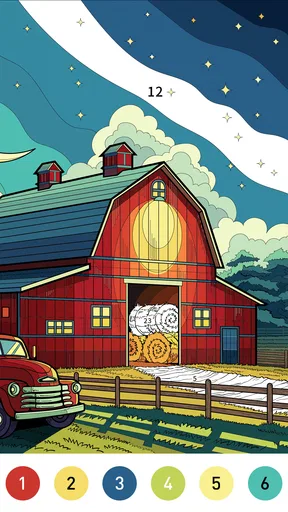

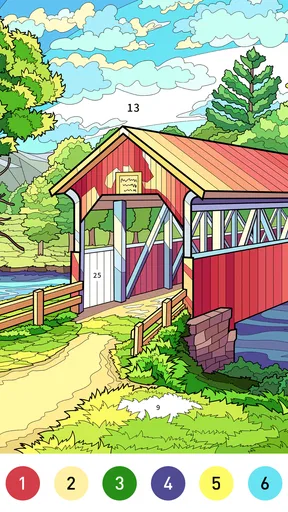
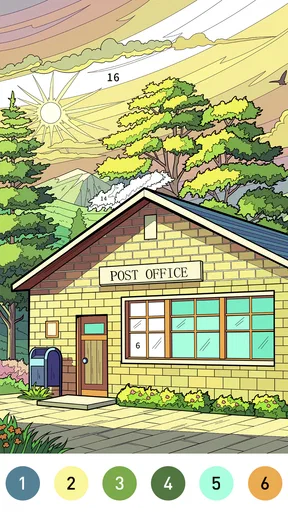


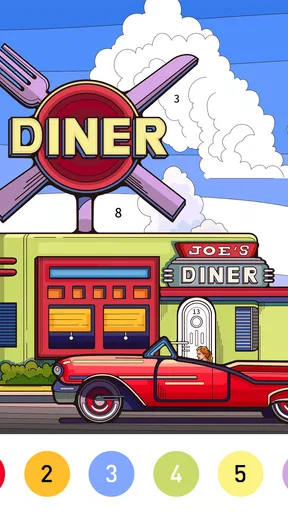
Our Review of Nostalgia Color by number game
 Analysis by Appyee
I approached Nostalgia Color expecting a simple coloring game, but its appeal became clearer after a few sessions: the pleasure is less about finishing quickly and more about watching a familiar-looking picture gradually become complete. It is a free board game from Art Coloring Group, aimed at Everyone, and it focuses on the quiet satisfaction of filling numbered spaces rather than competing against another player.
The basic action is easy to understand. I choose a picture, select a color or number, and tap the matching areas until that part of the image is finished. The game then gives me immediate visual feedback, because each correct section changes the picture in front of me. That small response is what makes the next tap feel worthwhile. It is a gentle loop, but it works well when I want something calm to do without learning complicated rules.
How the coloring loop feels in everyday use
I find the coloring loop easiest to enjoy when I treat it as a small, self-contained pause rather than a task I need to finish. Before tapping, I take a moment to scan for the active number; that quick overview helps me avoid aimless searching and makes the first few fills feel smoother. It also gives me a natural point to stop if I only have a spare minute, which leads to the practical question of what to check when the experience feels less straightforward.
The first action is deliberately simple
What I like most about the opening moments is that there is almost no barrier between launching the game and doing something. I do not need to understand a long tutorial or plan several moves ahead. The numbered coloring format tells me what to do: find the active color, locate its matching spaces, and fill them.
That simplicity makes it suitable for short breaks. I can open it while waiting for an appointment, during a quiet commute, or at the end of the evening when I do not have the energy for a demanding puzzle. The game does not ask me to remember a complicated board state. I can begin with one color, stop after a few minutes, and return later with the objective still obvious.
The trade-off is that this is not a traditional board game in the sense of rolling dice, placing pieces, or making strategic decisions against an opponent. Its board-like identity comes from the organized puzzle presentation and the structured act of completing an image. Anyone looking for tactical depth or multiplayer tension should know that the attraction here is relaxation and completion, not competition.
Why the feedback rhythm keeps me tapping
Every correct area provides a small piece of progress. I tap a space, see it change, and immediately know that the action counted. Then I look for the next matching section. That rhythm of action, response, and search is the real engine of the game.
It is a modest form of feedback, but it avoids the empty feeling that can come from tapping around without knowing whether I am advancing. The picture becomes easier to read as more spaces are filled, which creates a useful visual pull: unfinished areas stand out, while completed sections give me a sense that the image is coming together.
I found this especially effective when I treated each color as a small task instead of viewing the whole illustration as one large project. Finishing one group creates a natural pause. I can either continue while the image is fresh in my mind or put the phone down without feeling that I abandoned a complicated challenge.
One practical tip is to avoid rushing through the smallest spaces simply because they are easy to miss. When an image looks nearly complete, those remaining details can become the main source of friction. I prefer scanning the picture systematically, moving from one area to another, rather than tapping randomly. That approach makes the final stage feel cleaner and reduces the time spent hunting for isolated sections.
The reward is visual completion, not high pressure
The strongest reward is seeing an unfinished design turn into a finished one. I do not need a dramatic challenge to feel progress; the changing image supplies enough motivation. This makes the game a good fit for people who enjoy coloring books but want the convenience of a phone screen and numbered guidance.
The nostalgic theme also gives the activity a warmer tone than a purely abstract coloring exercise. The point is not simply to place colors in empty shapes. The completed picture is meant to evoke the feeling of looking back at familiar memories, which can make finishing an image feel more personal than completing a random geometric pattern.
Still, the emotional effect will vary from person to person. If I am expecting detailed creative control, I may find the numbered structure restrictive. I am following the assigned color areas rather than choosing every shade myself. That is a strength for anyone who wants guidance and a weakness for anyone who views coloring mainly as free-form artistic expression.
The game is free to start, which makes it easy to test whether this kind of reward suits me. It also includes in-app purchases ranging from $0.99 to $59.99 per item. I would approach those options carefully and decide first whether the basic loop genuinely fits my habits. A relaxing game can become less relaxing if I feel pushed to spend simply to maintain momentum, so checking the purchase prompt before confirming anything is sensible.
Why another session begins
The reason I return is not that one session changes dramatically from the next. It is that the game offers a fresh image and a fresh, manageable completion task. Once I finish or pause one picture, the idea of starting another is easy to understand: choose a new design, identify the first color, and begin the same satisfying process again.
This reset is important. A good short-session game needs to let me leave without penalty and come back without demanding a large investment of time. Nostalgia Color works best in that space. I can use it as a five-minute distraction or stay longer when I want a quieter activity. The loop resets naturally because each new picture restores the feeling of a clean start.
That same structure may disappoint players who need constant novelty in the mechanics. The action remains fundamentally the same: select, locate, tap, and complete. The variety comes from the pictures and the gradual visual transformation, not from new rules or increasingly complex strategy. If repetition normally makes me lose interest quickly, I may prefer a puzzle game with changing objectives.
Where it fits beside other coloring and board games
Compared with a physical coloring book, the main advantage is convenience. I do not need pencils, an eraser, a table, or a place to store unfinished pages. The phone keeps the activity available whenever I have a spare moment. The numbered format also removes the uncertainty of deciding which color belongs in each area.
Compared with free-coloring apps, this game gives me less artistic freedom but more direction. I do not have to build a palette or worry about whether my choices match the image. That makes it easier to relax, although it also means the finished result reflects the game’s design rather than my own creative decisions.
Compared with conventional board games, it is much less social and strategic. There is no need to wait for another player or manage a score-based contest. That is precisely why I would recommend it to someone who wants a board-game category title without the pressure of competition. I would not recommend it as a replacement for a family board game night, because its appeal is solitary and reflective.
Small habits that improve the experience
I get more from the game when I use it with a clear purpose. If I am trying to relax before sleep, I focus on steady progress rather than finishing the whole picture. If I am waiting somewhere, I choose a short, contained coloring session and stop at a natural break. Thinking of each color group as a mini-stage prevents the activity from feeling like an endless task.
Another useful habit is to rotate between careful scanning and quick filling. I first look over the image to understand where the active color appears. Then I complete the obvious sections before searching for the harder-to-see ones. This keeps the early part brisk while saving patience for the final details.
I also recommend treating nearly finished images differently from new ones. At the beginning, the visual transformation is obvious and motivating. Near the end, progress becomes harder to notice because only small spaces remain. Rather than interpreting that slowdown as a problem with the game, I see it as a cue to pause or switch tasks. Returning later can make those last areas easier to spot.
Who will enjoy it, and who should skip it
I think this game suits people who enjoy calm, repetitive activities with visible progress. It is a sensible choice for casual players, fans of digital coloring, and anyone who wants a low-pressure way to occupy short gaps in the day. The Everyone age rating also makes its presentation broadly accessible, though individual preferences about screen time and in-app purchases still matter.
It is less suitable for someone who wants a demanding logic challenge, competitive scoring, or a deep strategic board system. It may also frustrate artists who want to mix colors freely, draw outside predefined shapes, or control every part of the final composition. For those players, a creative drawing tool or a more traditional puzzle game would be a better match.
I would be cautious about recommending it to anyone who dislikes repetitive tapping. The core loop is intentionally narrow, and its comfort comes from that predictability. If I need constant surprises, complex objectives, or a strong sense of mastery, the game may feel limited after the initial novelty fades.
Practical details before installing
Art Coloring Group released the game on February 5, 2024, and the current version is 1.3.1. It supports devices running Android 7.1 or later, so compatibility is worth checking before installation, especially on an older phone or tablet.
The game is free, and its broad reach is reflected in more than one million installs. It holds an average rating of 4.4 from around 7.1 thousand ratings, with 834 written reviews. Those figures suggest that the simple coloring approach has found a substantial audience, although popularity should not be confused with a guarantee that the repetitive format will suit every player.
In my experience, the best way to judge it is to focus on the first complete coloring cycle. Notice whether the tap-and-fill response feels calming or merely monotonous. Pay attention to whether the finished image gives you enough satisfaction to start another one. That test tells me more than the category label does, because the entire experience depends on how I respond to the rhythm.
My verdict on the complete loop
Nostalgia Color succeeds by keeping its promise small and clear. I take an action by selecting and filling a numbered area. The game answers with immediate visual change. The reward is a more complete picture and the feeling that a quiet task is moving forward. When I stop, the next session is easy to begin because a new image offers another clean, understandable goal.
The core loop is strongest when I want calm progress rather than challenge. It gives me a focused activity for idle moments, and the nostalgic presentation adds more character than a completely generic coloring board. The experience is approachable, free to try, and simple enough for casual use.
My reservations are equally clear: the interaction can become repetitive, the numbered format limits creative control, and the purchase range means I should pay attention before spending. I would choose a different game for strategy, social play, or serious puzzle difficulty. But when I want to unwind with a picture that gradually comes alive under my taps, this is an easy recommendation to a friend who enjoys gentle, completion-focused games.
Overall, I see it as a digital coloring pastime with a board-game flavor, not as a strategic board game. Its success depends on whether the repeated cycle of action, feedback, reward, and reset feels satisfying to me. For the right player, that cycle is exactly what makes another short session feel worthwhile.
Verdict
Strengths of Nostalgia Color by number game
- Simple tap-to-fill controls are easy for beginners and casual players.
- Large image library offers plenty of designs to complete.
- Color palettes are clearly organized and easy to follow.
- Completed pictures can be saved and shared with friends.
- Relaxing gameplay works well for short breaks or longer sessions.
Limitations of Nostalgia Color by number game
- Some detailed pictures require considerable time to finish.
- Hints and extra tools may be limited without watching advertisements.
- The app can become repetitive if you prefer more interactive gameplay.
- Certain color choices may feel too similar on smaller screens.
- Frequent ads can interrupt the coloring experience between pictures.
Other Releases by Art Coloring Group
View All
Bible Color Paint By Number
Board4.8

Macabre Color Paint By Number
Board4.8

Black Color Paint By Number
Trivia4.8

Whimsy Color By Number Game
Board4.8
Similar Picks in This Category
View All
Ludo King®
Gametion4.1

Ludo
Yarsa Games4.6

Tile Master® - Matching Game
Higgs Studio3.6

Checkers Online
CC Games4.6

Dominoes
Loop Games4.7

Chess
Chess Prince4.6
Frequently Asked Questions
What is Nostalgia Color by Number?
Nostalgia Color by Number is a relaxing coloring game built around familiar, nostalgic artwork and pixel-style or numbered illustrations. You select a picture, choose the matching colors, and fill each section by tapping the corresponding numbers. The game is designed for casual play, creative relaxation, and short sessions, making it suitable for users who enjoy coloring without needing traditional artistic skills.
Is Nostalgia Color by Number free to download and play?
The game can generally be downloaded for free, although the exact availability and payment options may vary between Android and iOS. Like many coloring games, it may include advertisements, optional hints, extra content, or in-app purchases. Before downloading, check the store listing for current pricing, subscription details, and whether certain images or features require payment.
Does Nostalgia Color by Number work offline?
Many of the available coloring pages can usually be enjoyed without a constant internet connection once they have been loaded, which is convenient for travel or areas with limited service. However, internet access may still be required for downloading new artwork, displaying advertisements, restoring purchases, synchronizing progress, or accessing special events. Offline support can also differ by device version.
Is Nostalgia Color by Number suitable for children?
The simple tap-to-color controls make Nostalgia Color by Number easy for many children to understand, while the nostalgic themes may appeal more strongly to teenagers and adults. Parents should still review the available artwork, advertisements, privacy information, and in-app purchase settings before allowing younger players to use it. Age recommendations may differ depending on the platform and region.
What are the main advantages and drawbacks of Nostalgia Color by Number?
Its main advantages are the straightforward controls, calming gameplay, large selection of numbered pictures, and the satisfaction of completing colorful images without complicated tools. It can be a pleasant way to pass time or unwind. Potential drawbacks include repetitive tapping, advertising interruptions, locked artwork, optional purchases, and limited creative freedom compared with a fully manual coloring application.
Play our best games!


